

‘Genoa’ No, I’ve never heard of her….’ So the childish joke went. Italians know the city we call Genoa as Genova so would never be able to make such a joke, that and they are much too cool for such puerility.
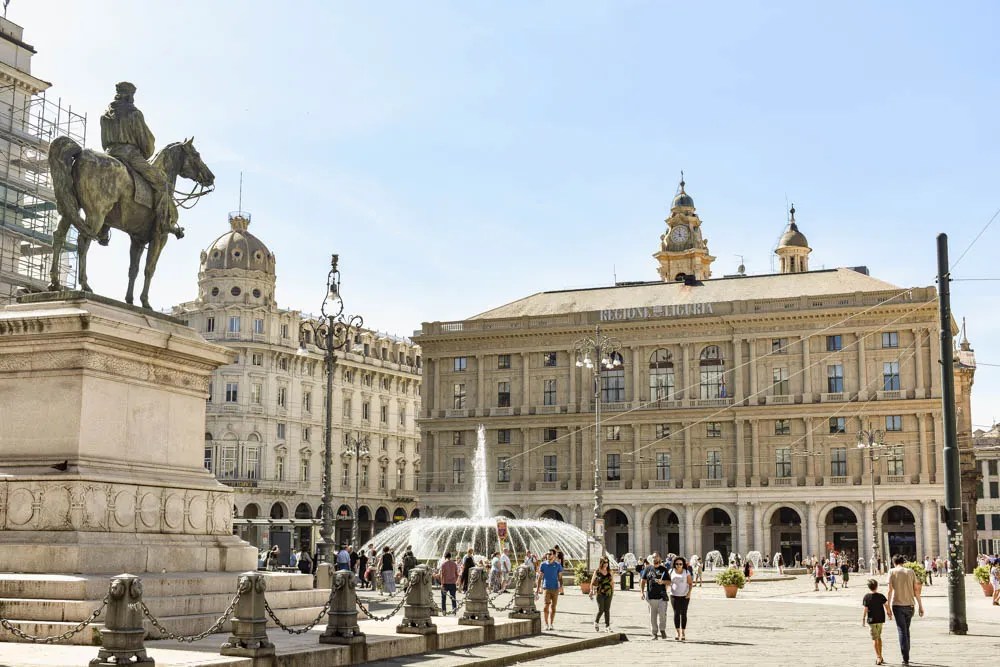
The birthplace of Christopher Colombus, this port city reminded me in many ways of Naples. It has a huge historic centre, indeed the biggest in Europe, that is full of narrow alleyways, locally called Caruggi. Getting lost in the centre of Genoa is a rite of passage when you visit.
It also has a huge port area, one of the most important in Italy. This is both a commerical and passenger (cruise) termini, the latter means the historic centre is flooded with tourists in the middle of the day but it quietens down somewhat in the evenings.
The main sights in the Centro Historico are the San Lorenzo Cathedral, The Museum Of The Sea, Museum Strada Nuova, The Acquariun, The Palazzo Reale and the Piazza De Ferrari. However even without visiting any of these much of the fun is strolling through the old town just enjoying the ambiance
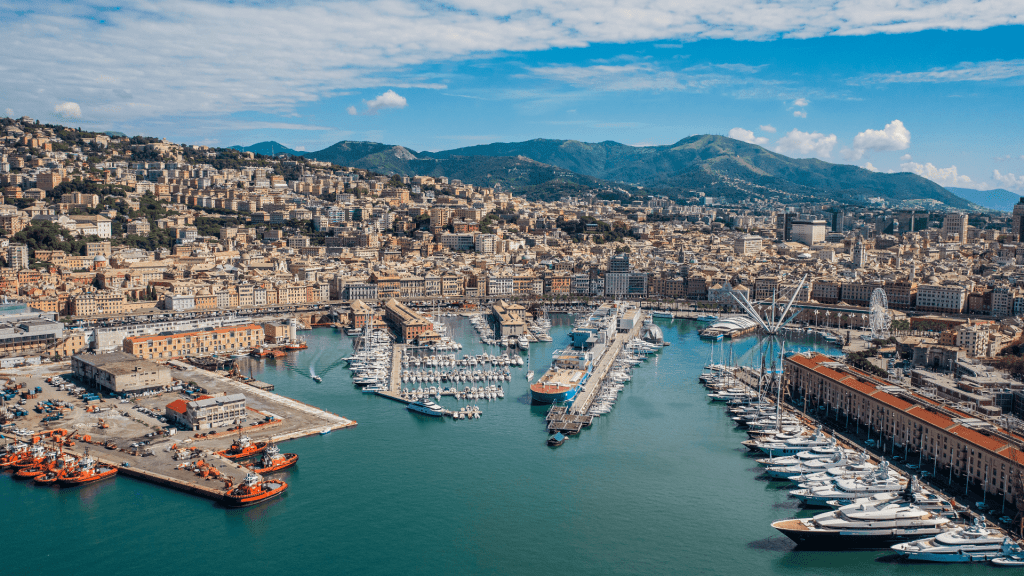
Genoa is the capital of Liguria, a region famous for its spectacular coastal scenery The city itself rises quickly from the port area, to residential areas that cling, often precariously, to the edge of these hills . As such Genoa has devised many ingenious modes of public transport to help the locals get around. Here you will find the usual buses, metro and regional train networks, but also funiculars, lifts, as well as cog and narrow gauge railways. Nearly all of the local public transport is free if you are a resident, for tourists and non- residents it is still very reasonable with a single journey in the city being approximately €1.50.

Another reason for visiting Genoa is its proximity to some of the most impressive coastal scenery in the whole of Italy. I had visited the Parco Regionale di Portofino previously when we were staying in the Cinque Terre area. From Monterosso Al Mare we took a quick one hour train to Santa Maguerite Ligure and then a bus to the upmarket, celebrity hangout of Portofino. Staying in Genoa gave me the opportunity to explore the northern side of the same peninsula.

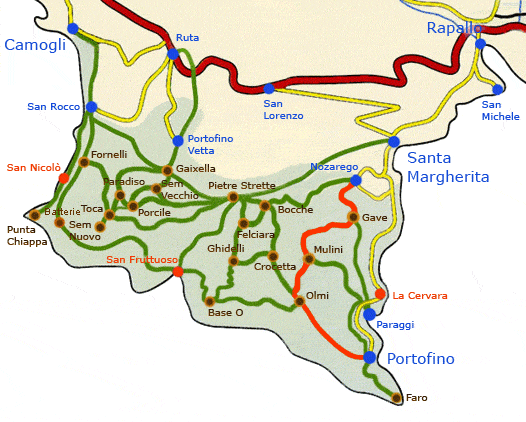
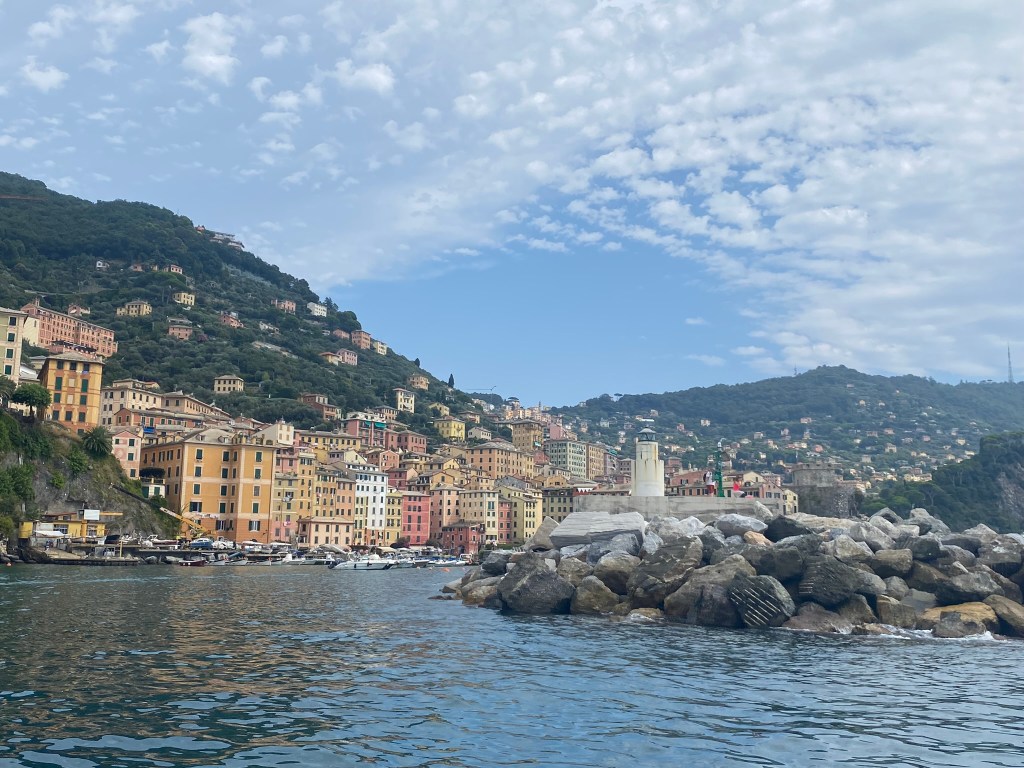
From the centre of Genoa I took a 1-hour train to Camogli. From this pretty coastal town there are a number of hiking opportunities. My aim pre trip was to take the famous and precarious walk to San Fruttuoso abbey via the coastal route. Known as The San Rocco / Battery walk, this 3-4 hour trek hugs the coastline overlooking the Golfo Paradiso. Chellenging in parts and lets be clear frankly dangerous in others this partial via ferrata route has been closed since November 2023 after a number of tourist deaths. For now it remains a work in progress whilst the paths are made more secure.
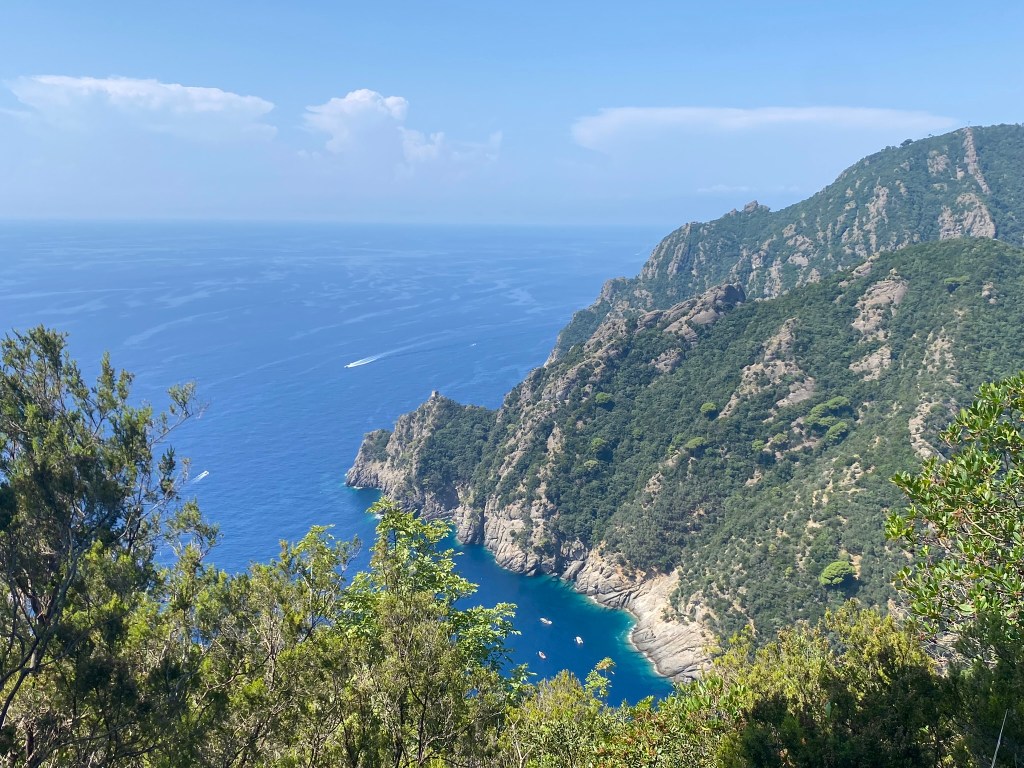
The abbey can only be accessed by foot or by boat. Instead of the precipitous coastal route I took the inland route, The path splits at the village of San Rocco di Camogli, here there is a little shop where you can refuel and get a mid- morning espresso hit. As is typical in Italian National Parks, trails are well signed but it also worth having some sort of online naviagation as a back up. After the steep and hot hike up to San Rocco the trail is fairly flat before descending back down to coastal bay where the abbey and finish to my walk was. In the small bay there are a couple of quick serve restaurants where you can get refreshments. Despite its remoteness the small beach was packed (this was at the end of August, so still high season). The boat back to Camogli runs every hour at this time of year and takes a brisk 30 minutes, tickets can be bought on the day.

Genoa is recommended for those who’ve visited most of the well known cities in Italy and are looking for a new one to quench your Italian wanderlust. The city centre can be done in a day or two and then if time permits you have the option to explore the spectacular coast by on foot or by boat.
 From The Banks Of The River Irwell