
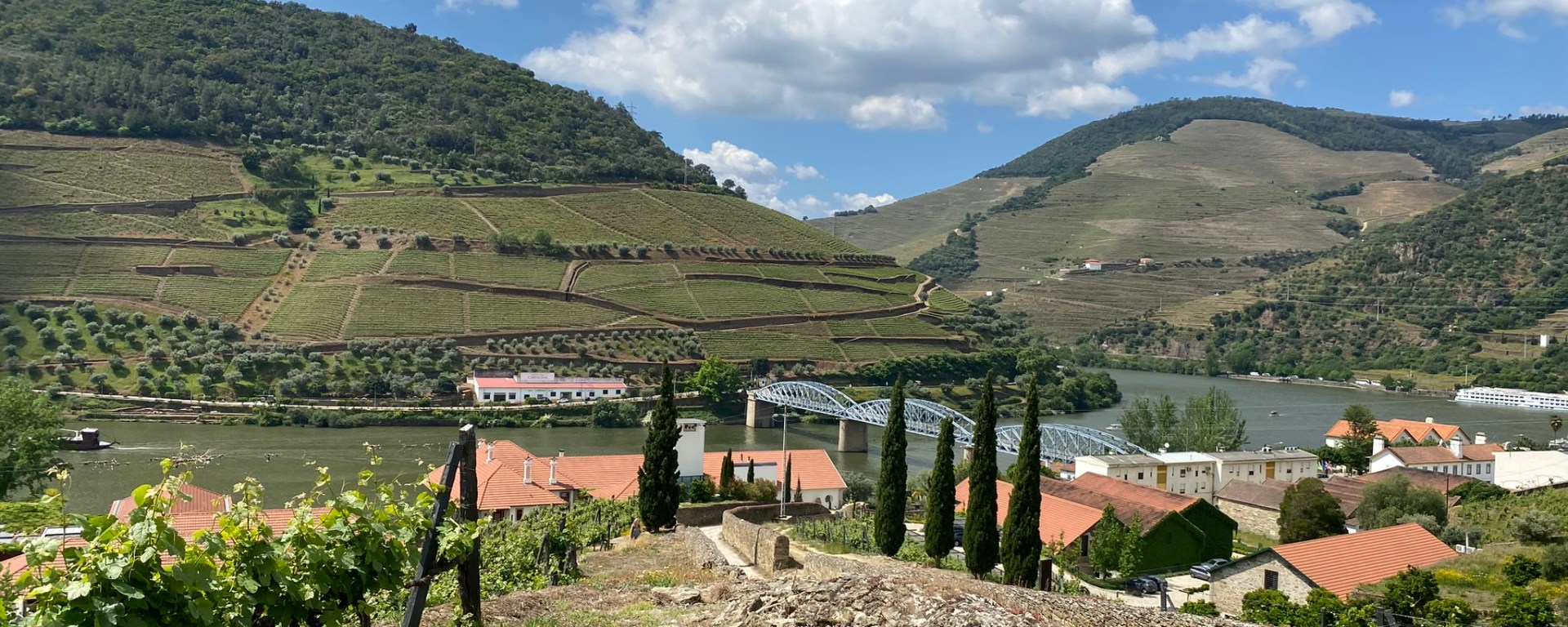
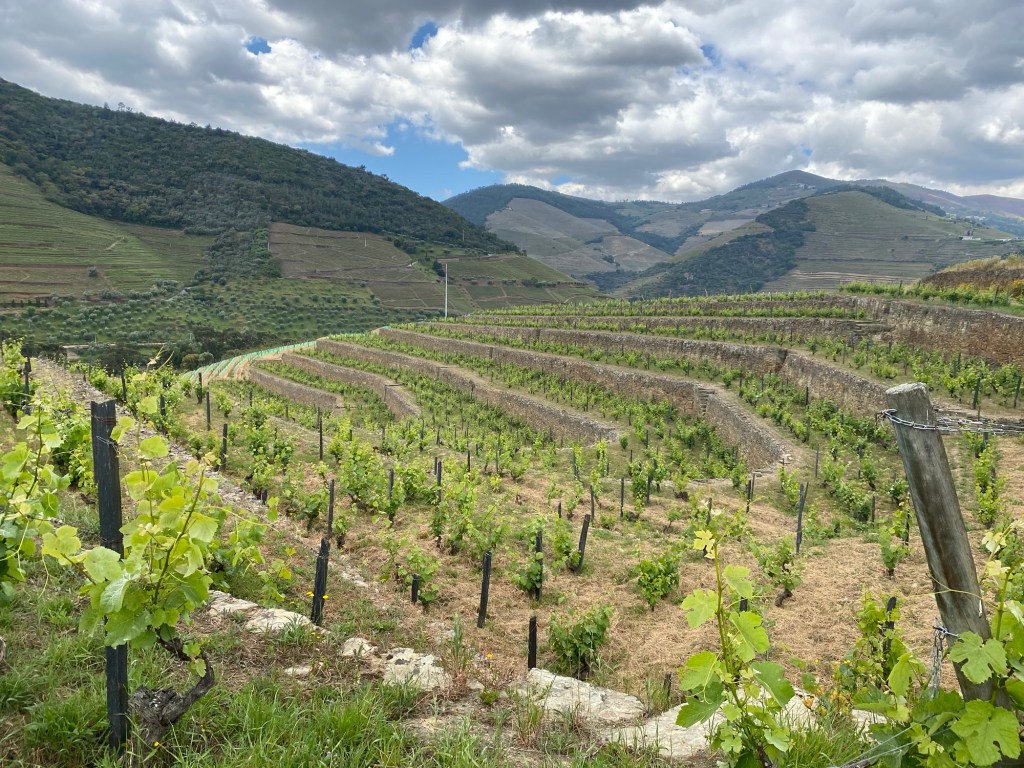
With 4 days off work in late April and needing to get away from the endless rain in Manchester I booked a short city break to the warmer and drier environs of Porto in Northern Portugal.
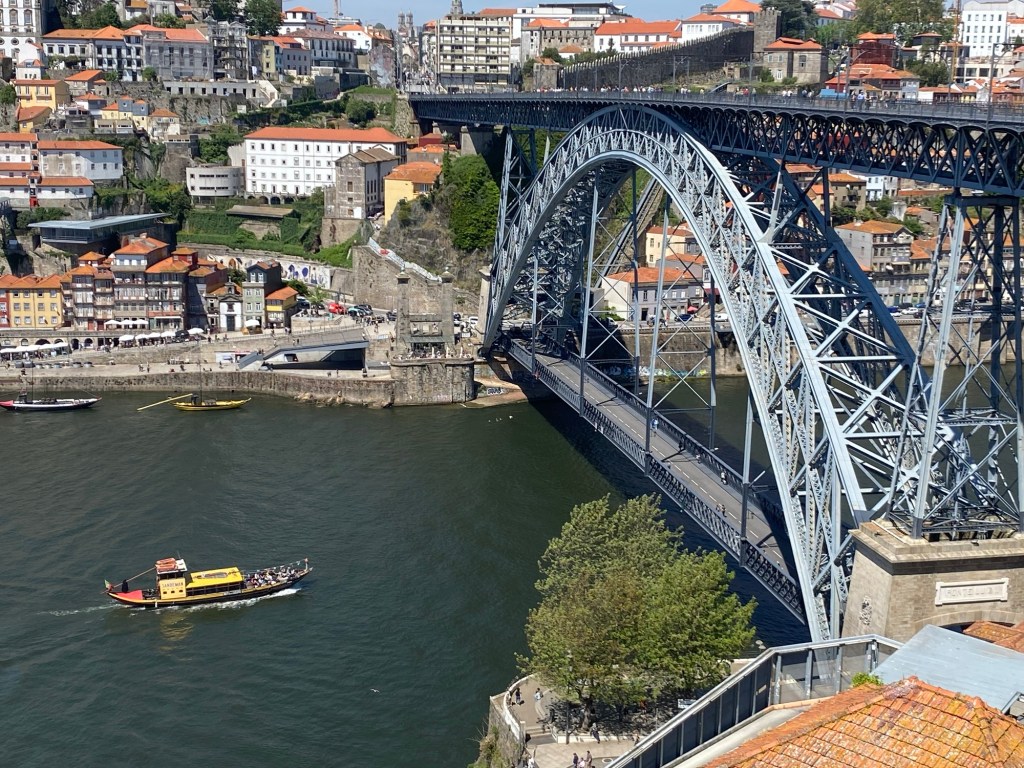
I had 3 nights away giving me 2 full days, one I used for exploring the city of Porto itself and the other for visiting the Douro Valley. This blog will focus on the latter.
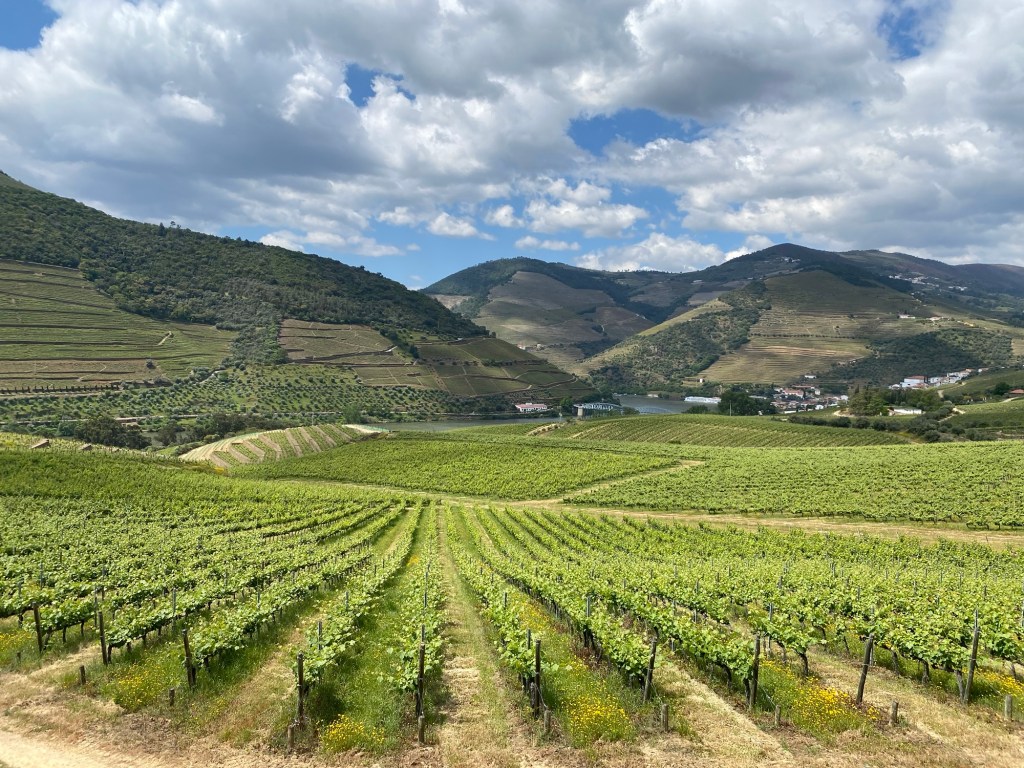
The Douro river doesn’t make the top 10 longest rivers in Europe but the route it carves is definitely one of the most spectacular. Starting in the Spanish province of Soria it winds its way 897km (557 miles) to the Atlantic Ocean in Porto.
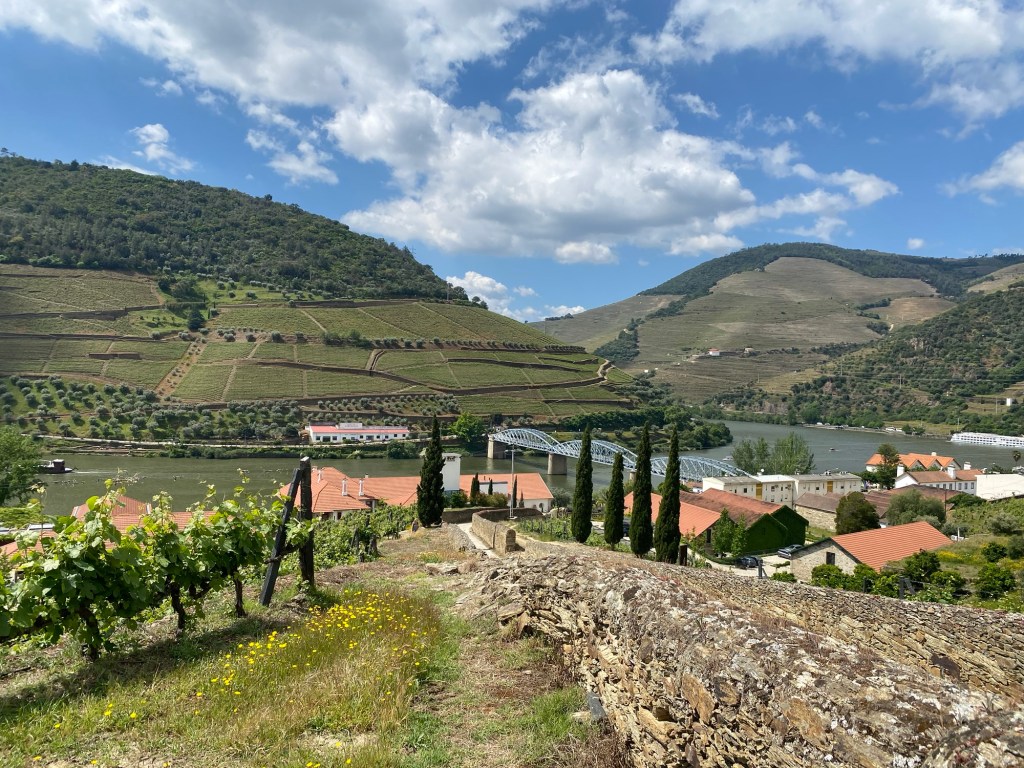
The region is most famous for Port wine and the vineyards you spot as you explore further upstream are testament to this age old industry. Indeed the Douro Valley is the only place in the world that can legally produce what is called Port wine. Whilst Portugal had been producing wine for hundreds of years the unique Port flavour was primarily driven by political tensions and trade embargoes between England and France. Looking for an alternative wine source Britain turned to Portugal, with its centuries old viticulture being the obvious choice. However due to the longer travel distance to take the barrels back to England the wine needed to be fortified (with a grape spirit, usually Brandy) to slow down the fermentation process, which preserved more of the wine’s sugars. This sweeter taste proved a hit with the British hoi polloi and from there the trading relationship burgeoned. Many British investors and wine importers subsequently set up their own vineyards in Portugal. The legacy of this can still be seen today with names such as Taylor’s, Symingtons, Cockburn and Dows, amongst others, seen all along the Douro valley.
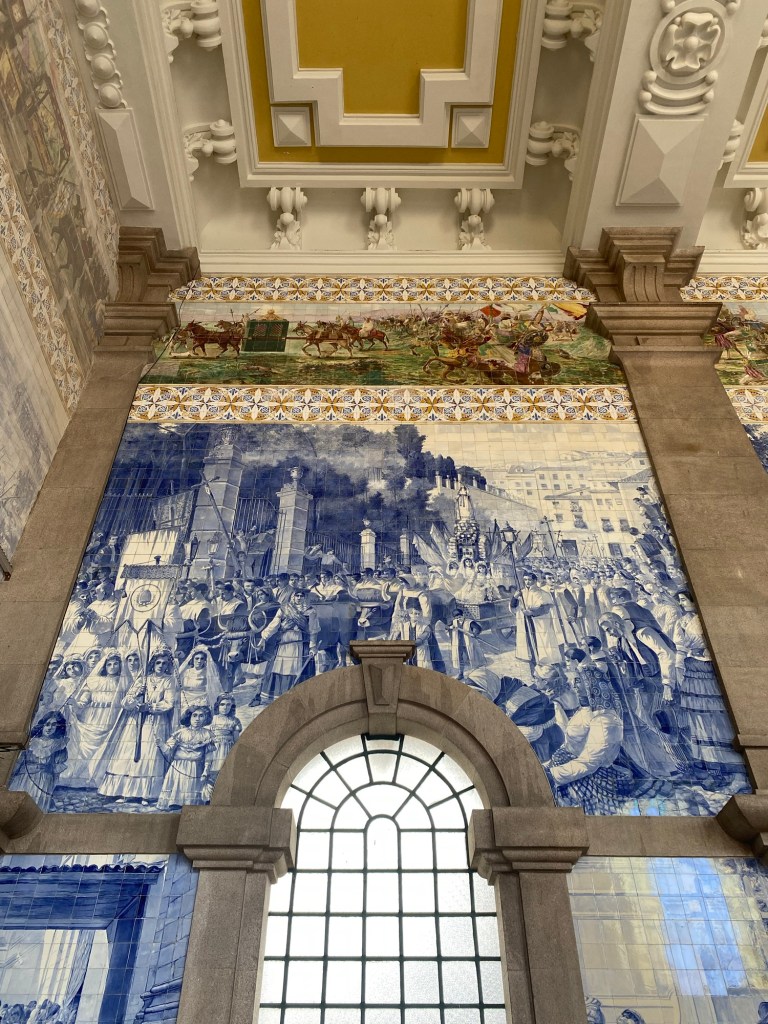
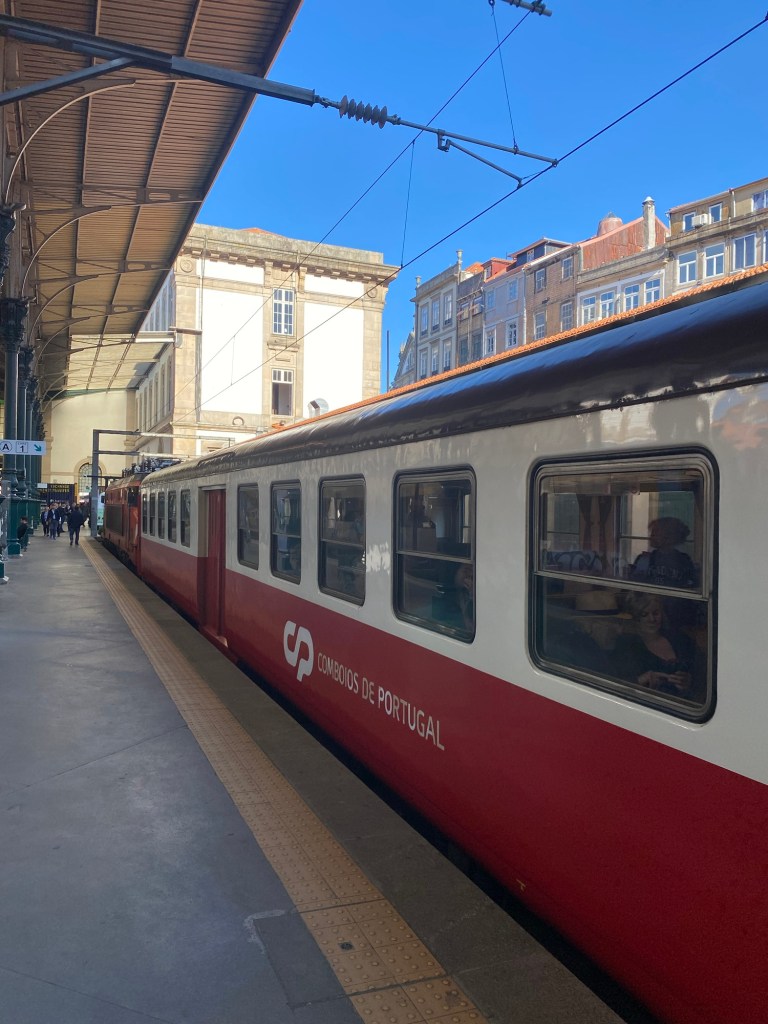
I took the train from the impressive Sao Bento station in central Porto (see above). Using the fantastic Seat61 website I made sure I was on the MiraDouro classic carriage trains. Whereas these are more ‘old school’ they take a more leisurely pace along the valley, giving you plenty of chance to take photos (note the windows on these carriages do roll down – something none of the tourists realised until some locals came on and showed us!)
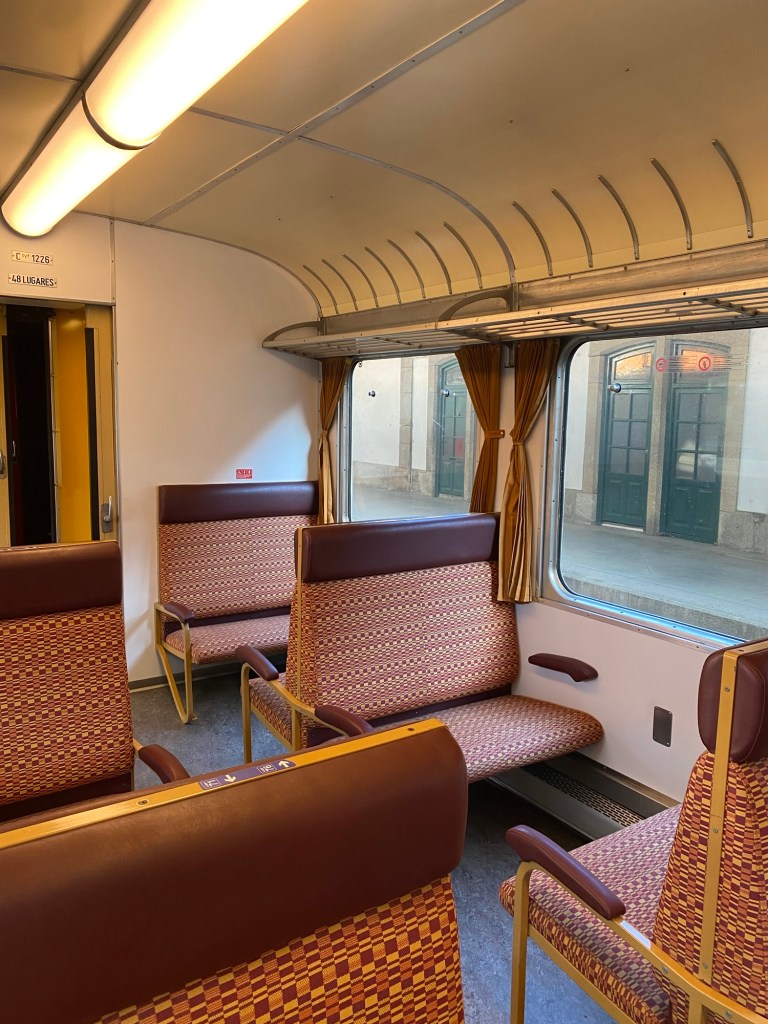
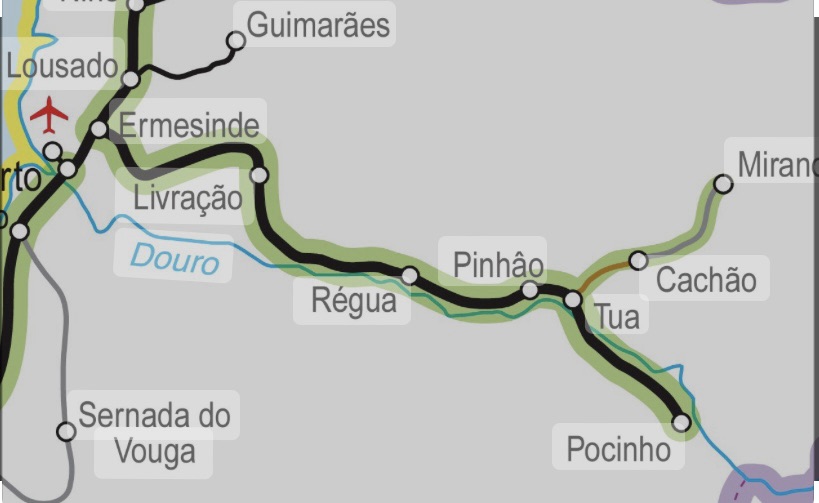
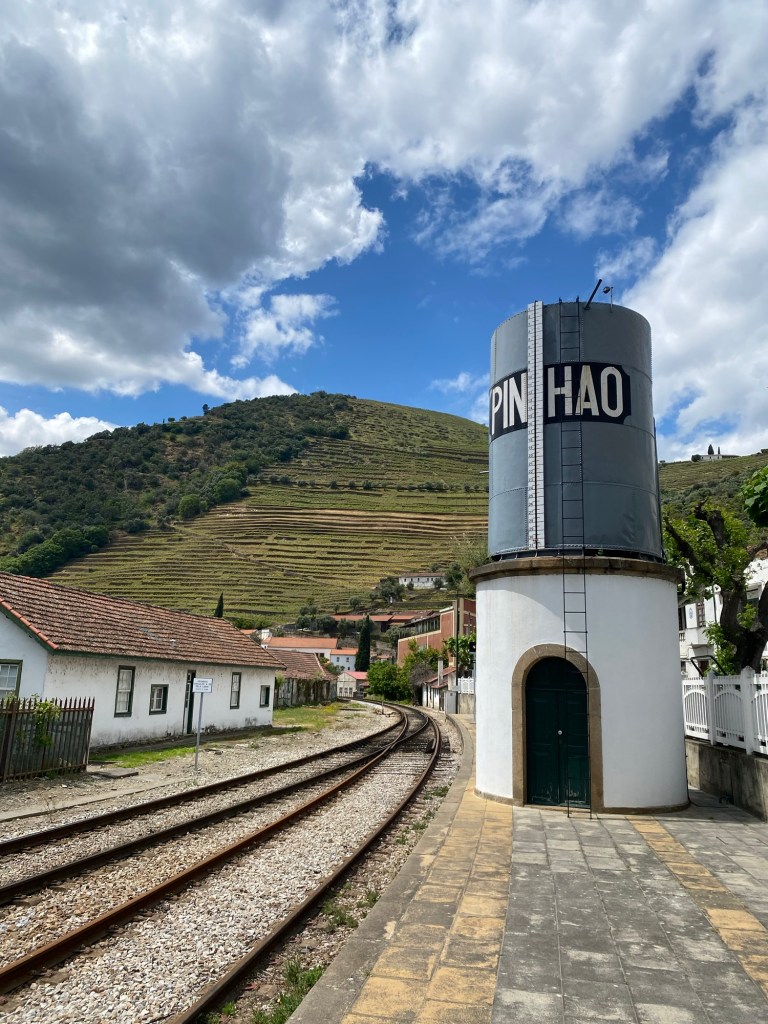
As I was doing it as day trip I only ventured as far as Pinhao (see map below) which took just under 2 hours from Porto. From chatting to people on the way back they assured me that other villages such as Tua and Pocinho (both further away from Porto heading East) were just as spectacular. The first hour as you leave the city of Porto is nice but a little underwhelming. It is not until you reach just before Régua when the river is adjacent to the train that you get the more impressive vistas. It is recommended to sit on the right hand side (facing forward) going out and the left side coming back. Tickets can easily be booked on the day. As there’s no reserved seats it’s best to get there early to bag a good window spot.
Once I reached Pinhao I quickly walked away from the small town and into the vineyards. Due to the train scheduling I had about 3 hours here so made sure I didn’t venture too far. However by walking just a short distance I was able to get amazing views across the valley and steep sided vineyards. After leisurely picnic lunch under an orange tree I headed back to Pinhao to a cafe for some Port and a Pastel De Nata. The train journey back, although passing through the same areas, was equally impressive in the late afternoon sunshine.
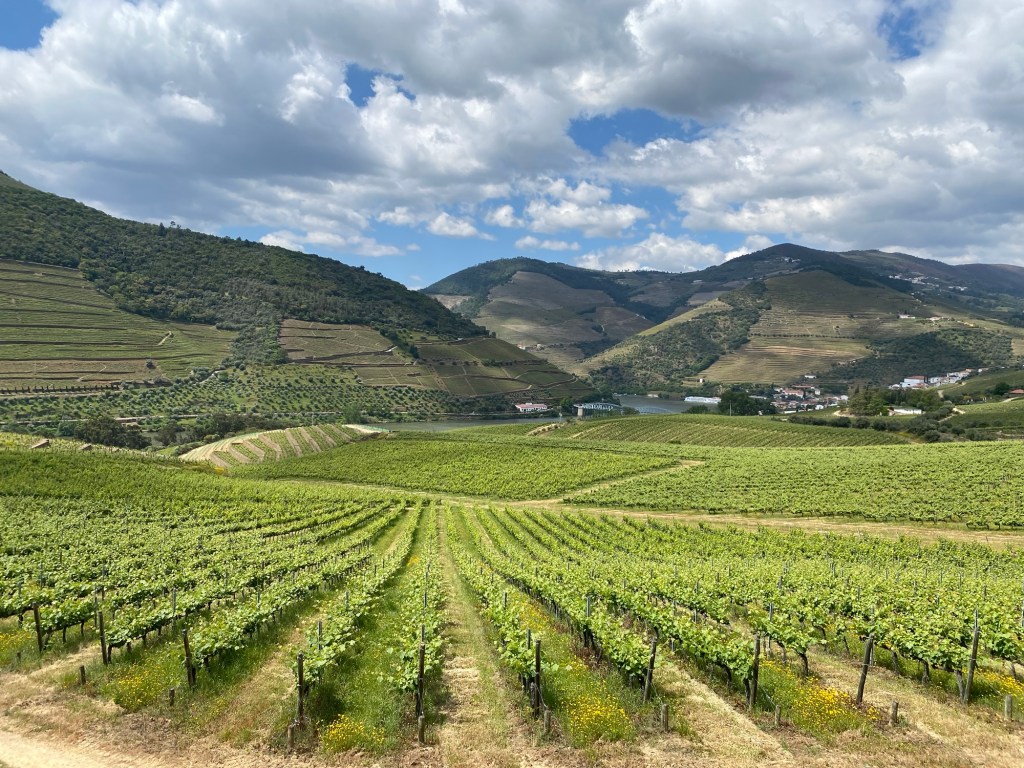
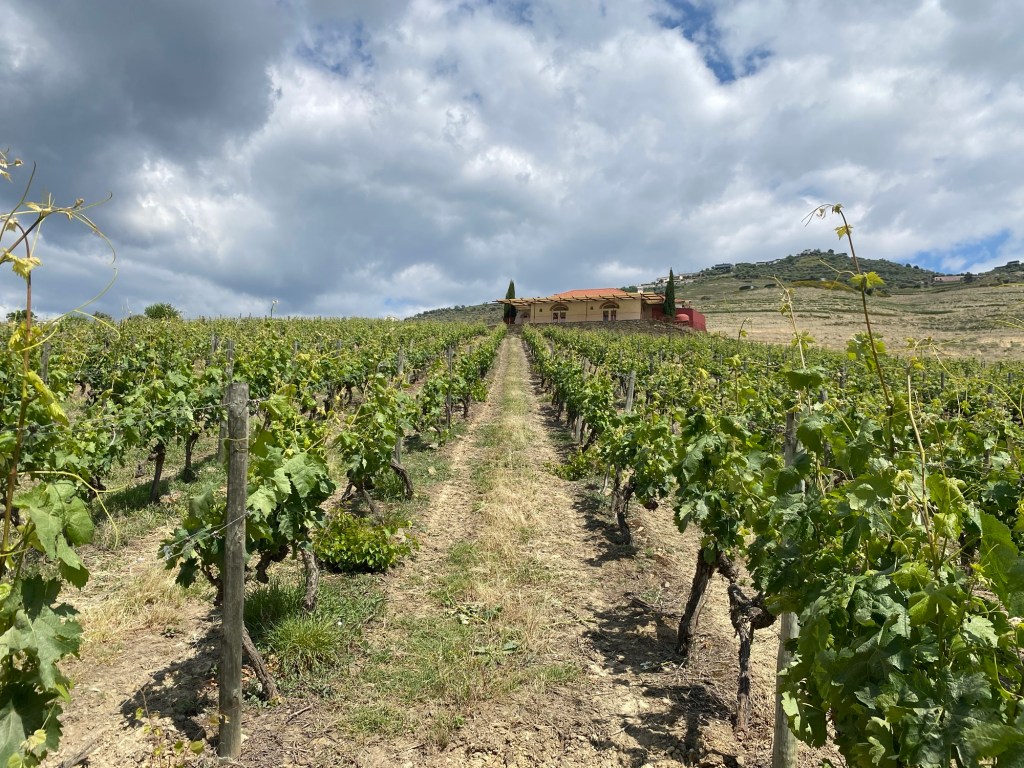
If I had more time I would stay a night at one of the small hotels in the valley, do a longer walk and perhaps undertake a full tasting sessions at one of the local vineyards.
Vineyard visits can be arranged informally by walking to the visitors centres that all the properties have. If you want a more formal sampling with food pairings you can easily book through the vineyard websites.
As well as the train you could take a cruise from Porto or hire a care and drive through the Douro valley. Personally I liked the train as it was very easily to organise locally, however the downside is you are more restricted by rail timetables. A car gives greater flexibility and would be better for overnight stops, whereas a cruise might be preferable for people looking to travel at a more more leisurely pace.
However you plan to get to the Douro Valley it will be worth it for the amazing views, history and of course the Port itself!
 From The Banks Of The River Irwell